Introduction: Why Data Precision Has Become the New Battlefield?
In the digital age, data is no longer just raw input; it has evolved into a strategic asset that determines an organization's survival. However, the sheer volume of data does not automatically translate into a competitive advantage. The true differentiator is the ability to process that data into intelligent analytics quickly and accurately. This is why data precision has become the new battlefield for business players.
Technology vs Strategy: Understanding the Limits of AI Implementation in Enterprises
While investment in AI technology is essential, many enterprises face real challenges in implementing it. One major obstacle is the complexity of integrating with existing legacy systems where data is often fragmented and incompatible with modern workflows. Additionally, the availability of high-quality data—clean, consistent, and relevant—is frequently a significant constraint. Without a solid data foundation, even the most advanced AI algorithms will produce biased or useless outputs. Therefore, a common mistake is treating AI as a turnkey solution that can be applied immediately without first building a robust data ecosystem.
Integration Blueprint: Building a Data Pipeline That Drives Strategy
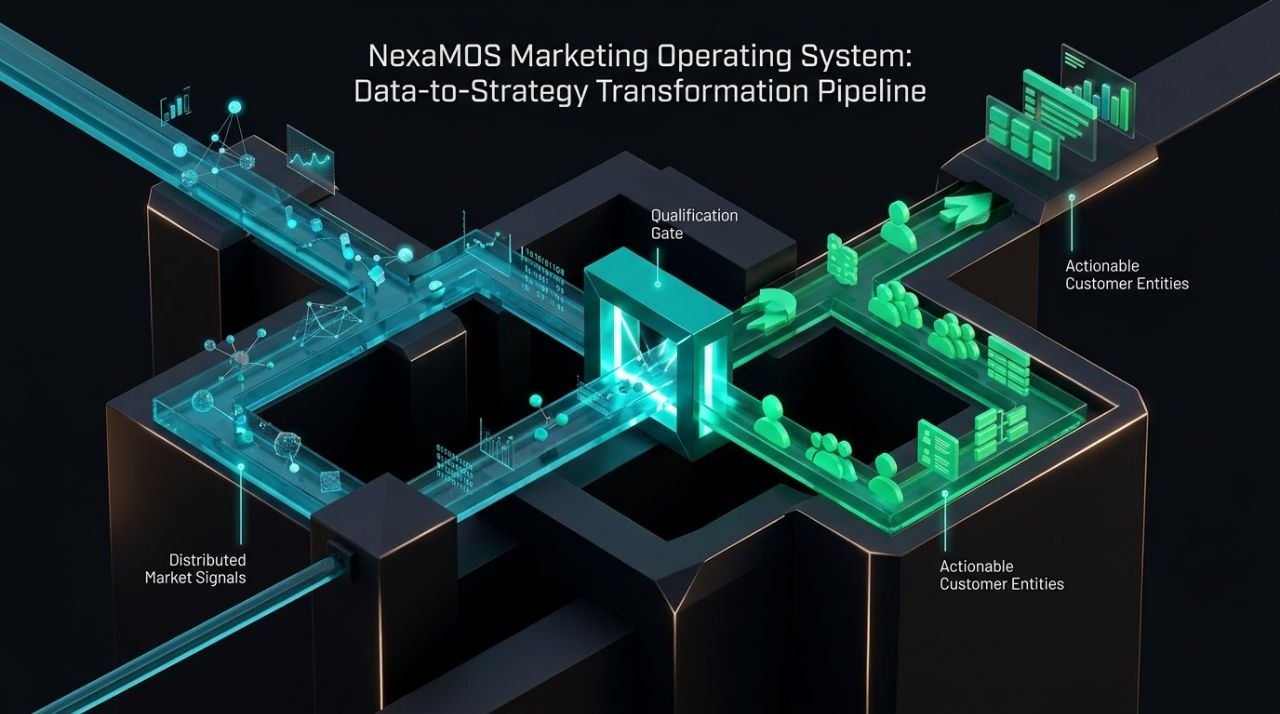
To integrate AI with marketing strategy and competitive decision-making, companies need to design an automated data pipeline blueprint. The first step is to collect data from various customer touchpoints automatically, ranging from websites and social media to offline transactions. Then, this data is processed and analyzed using advanced analytics platforms to perform behavioral and preference-based customer segmentation. Next, predictive models are calibrated to identify market opportunities, competitor threats, and unmet consumer patterns. Consequently, this entire process yields data feeds that efficiently inform operational and strategic decisions.
Strategic Implications: Risks and Opportunities in the AI Era
Late or misdirected AI adoption carries existential risks for companies. Those left behind will become increasingly dependent on large AI vendors who control platforms and algorithms, thereby losing control over strategic data. On the other hand, companies that successfully build superior AI analytical capabilities will have the opportunity to create new markets,奪取传统竞争对手的市场份额,并以前所未有的速度响应市场变化。因此,必须回答的核心问题是:当前的AI能力是否与领先竞争对手相当?
Conclusion: Practical Steps to Kickstart Your AI Transformation
AI transformation does not have to start with complex large-scale projects. The most important first step is to conduct an internal capability audit to identify strengths and weaknesses in the data and analytics pipeline. Begin with a specific use case that has clear ROI, such as automating marketing campaign analytics or fraud detection. By focusing on concrete results and continuous iteration, companies can gradually build a data-driven and AI-centric culture that becomes the core of every strategic decision.
Pendahuluan: Mengapa Presisi Data Menjadi Medan Perang Baru?
Di era digital, data bukan lagi sekadar input mentah; ia telah berevolusi menjadi aset strategis yang menentukan kelangsungan hidup sebuah organisasi. Namun, volume data yang masif tidak serta-merta memberikan keunggulan kompetitif. Yang benar-benar menjadi diferensiator adalah kemampuan untuk mengolah data tersebut menjadi analisis cerdas secara cepat dan akurat. Inilah mengapa presisi data kini menjadi medan perang baru bagi para pelaku bisnis.
Teknologi vs Strategi: Memahami Batas Implementasi AI dalam Enterprise
Meskipun investasi teknologi AI sangat diperlukan, banyak perusahaan enterprise menghadapi tantangan nyata dalam mengimplementasikannya. Salah satu hambatan utama adalah kompleksitas integrasi dengan sistem legacy yang sudah ada, di mana data seringkali terfragmentasi dan tidak kompatibel dengan alur kerja modern. Selain itu, ketersediaan data berkualitas tinggi—bersih, konsisten, dan relevan—sering kali menjadi kendala signifikan. Tanpa fondasi data yang solid, bahkan algoritma AI paling canggih pun akan menghasilkan output yang bias atau tidak berguna. Oleh karena itu, kesalahan umum adalah menganggap AI sebagai solusi turnkey yang bisa langsung diterapkan tanpa membangun ekosistem data yang kokoh terlebih dahulu.
Blueprint Integrasi: Membangun Pipeline Data yang Menggerakkan Strategi
Untuk mengintegrasikan AI dengan strategi pemasaran dan pengambilan keputusan kompetitif, perusahaan perlu merancang blueprint pipeline data yang terotomasi. Langkah pertama adalah mengumpulkan data dari berbagai titik kontak pelanggan secara otomatis, mulai dari website, media sosial, hingga transaksi offline. Kemudian, data tersebut diproses dan diolah menggunakan platform analitik canggih untuk melakukan segmentasi pelanggan berbasis perilaku dan preferensi. Selanjutnya, model prediktif dikalibrasi untuk mengidentifikasi peluang pasar, ancaman kompetitor, dan pola konsumen yang belum terpenuhi. Dengan demikian, seluruh proses ini menghasilkan feed data yang menginformasikan keputusan operasional dan strategis secara efisien.
Implikasi Strategis: Risiko dan Peluang di Era AI
Adopsi AI yang lambat atau salah arah membawa risiko eksistensial bagi perusahaan. Mereka yang tertinggal akan semakin tergantung pada vendor AI besar yang menguasai platform dan algoritma, sehingga hilangnya kendali atas data strategis. Di sisi lain, perusahaan yang berhasil membangun kapabilitas analitis AI superior akan mendapatkan peluang untuk menciptakan pasar baru, merebut pangsa pasar dari pesaing yang lebih tradisional, dan merespons perubahan pasar dengan kecepatan yang tak tertandingi. Oleh karena itu, pertanyaan sentral yang harus dijawab adalah apakah kapabilitas AI saat ini sebanding dengan pesaing terdepan?
Penutup: Langkah Praktis untuk Memulai Transformasi AI Anda
Transformasi AI tidak harus dimulai dari proyek besar yang kompleks. Langkah pertama yang paling penting adalah melakukan audit kapabilitas internal untuk mengidentifikasi kekuatan dan kelemahan dalam pipeline data dan analitik. Mulailah dengan use case tertentu yang memiliki ROI yang jelas, misalnya otomatisasi analisis kampanye pemasaran atau deteksi penipuan. Dengan fokus pada hasil konkret dan iterasi yang berkelanjutan, perusahaan dapat secara bertahap membangun budaya berbasis data dan AI yang menjadi inti dari setiap keputusan strategis.