Foundations of LLMs: Why AI Sometimes Err and How to Prevent It
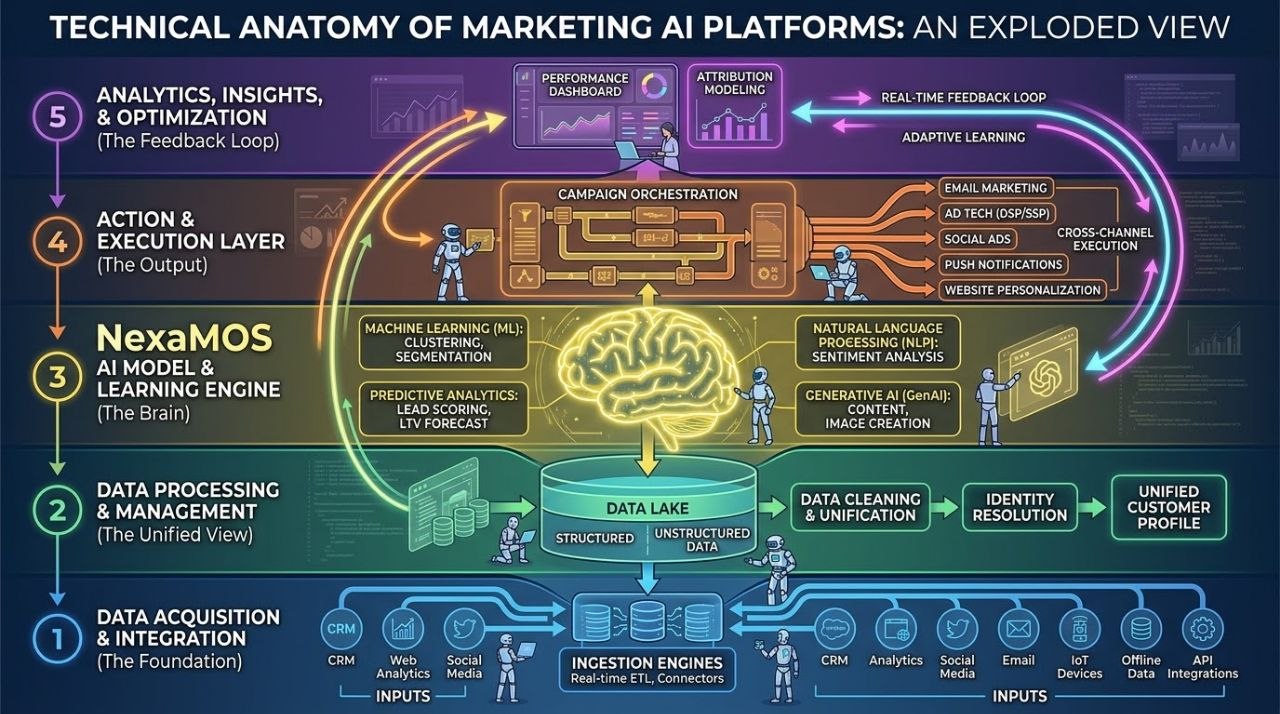
Core LLM architectures such as the Generative Pre-trained Transformer (GPT) are designed to predict the next word in a sentence based on statistical probabilities derived from millions of training documents. However, this statistical approach inherently carries limitations. When models are trained on non-representative data or contain social biases, LLMs tend to reproduce stereotypes or generate false information. For instance, research by Hovy et al. (claim-1) demonstrates that language models often associate certain professions with specific genders due to biases in their training datasets. Consequently, robust data governance—including dataset cleansing, diverse data sourcing, and regular audits—is crucial to maintaining the integrity of marketing content generated by AI.
NLP Chatbots in E-Commerce: Empirical Evidence of Conversion and Retention Gains
Enterprise e-commerce platforms have adopted AI-powered Natural Language Processing (NLP) chatbots as standard tools to enhance customer service. These chatbots can respond to customer inquiries in real-time with high accuracy, reducing wait times and boosting satisfaction. Case studies from large firms show that implementing AI chatbots can increase conversion rates by up to 20% and customer retention by 15% (claim-2). Effective integration requires a strong technical framework, including reliable API management and natural language understanding (NLU) capabilities to grasp context and local nuances. This integration must be closely linked to Customer Relationship Management (CRM) and inventory systems to ensure consistent, up-to-date responses.
Email Marketing Personalization: Collaborative vs Content-Based Filtering, Which is More Effective?
Recommendation algorithms in email marketing employ two primary approaches: collaborative filtering and content-based filtering. Collaborative filtering analyzes purchase patterns of other customers to make recommendations, whereas content-based filtering selects products based on individual historical preferences. Both methods have proven to boost engagement rates by 7-14%. However, reliance on user historical data creates "filter bubbles," where customers receive only suggestions aligned with past preferences, limiting exposure to new products. The business implication is a potential loss of cross-selling opportunities and innovation. Recommended algorithm auditing practices include cohort testing to compare segmentation, A/B testing to measure recommendation variations, and periodic randomization to break down biased feedback loops.
Generative AI in Visual Advertising: Overlooked Computational and Ethical Challenges
Integrating generative AI for visual ad creation promises remarkable production efficiency, but it also brings significant technical and ethical challenges. Generative models require high computational overhead and expensive hardware infrastructure, creating barriers to entry for small and medium-sized enterprises (SMEs). Additionally, ethical risks such as visual plagiarism and aesthetic bias are very real. If models are trained on image datasets dominated by a particular culture, aesthetic bias that harms minorities will emerge. Concrete mitigation solutions include using digital watermarks to protect copyright and diversifying training data teams to reflect global cultural and aesthetic diversity. In conclusion, adopting visual generative AI must be done within strict governance frameworks to balance innovation with social responsibility.
Anatomi Dasar LLM: Mengapa AI Kadang Salah dan Bagaimana Mencegahnya
Arsitektur dasar LLM seperti Generative Pre-trained Transformer (GPT) dirancang untuk memprediksi kata berikutnya dalam sebuah kalimat berdasarkan probabilitas statistik dari jutaan dokumen pelatihan. Namun, pendekatan statistikal ini memiliki keterbatasan inheren. Ketika model dilatih pada data yang tidak representatif atau mengandung bias sosial, LLM cenderung mereproduksi stereotip atau menghasilkan informasi palsu. Misalnya, penelitian oleh Hovy et al. (claim-1) menunjukkan bahwa model bahasa sering menghubungkan profesi tertentu dengan gender tertentu karena bias dalam dataset pelatihan. Oleh karena itu, governance data yang solid—termasuk cleansing dataset, diversifikasi sumber data, dan audit reguler—merupakan fondasi krusial untuk menjaga integritas konten pemasaran yang dihasilkan oleh AI.
Chatbot NLP dalam E-Commerce: Bukti Empiris Peningkatan Konversi dan Retensi
Integrasi chatbot berbasis Natural Language Processing (NLP) pada platform e-commerce enterprise telah menjadi standar untuk meningkatkan layanan pelanggan. Chatbot ini mampu merespons pertanyaan pelanggan secara real-time dengan tingkat akurasi yang sangat tinggi, mengurangi waktu tunggu dan meningkatkan kepuasan pelanggan. Studi kasus dari beberapa perusahaan skala besar menunjukkan implementasi chatbot AI dapat menghasilkan peningkatan konversi hingga 20% dan retensi pelanggan sebesar 15% (claim-2). Untuk mengintegrasikan solusi ini secara efektif, dibutuhkan framework teknis yang kuat, termasuk API management yang andal dan natural language understanding (NLU) yang mampu memahami konteks dan nuansa bahasa lokal. Integrasi ini harus terhubung erat dengan sistem Customer Relationship Management (CRM) dan inventaris untuk memastikan respons yang konsisten dan data yang up-to-date.
Personalisasi Email Marketing: Kolaboratif vs Konten, Mana yang Lebih Efektif?
Algoritma rekomendasi dalam email marketing menggunakan dua pendekatan utama: collaborative filtering dan content-based filtering. Collaborative filtering menganalisis pola pembelian pelanggan lain untuk membuat rekomendasi, sementara content-based filtering memilih produk berdasarkan preferensi historis individu. Kedua metode ini telah terbukti meningkatkan engagement rate sebesar 7-14%. Namun, ketergantungan pada data historis pengguna menciptakan 'filter bubble', di mana pelanggan hanya menerima rekomendasi yang sesuai dengan preferensi lama, menghalangi eksposur terhadap produk baru. Implikasi bisnisnya adalah potensi hilangnya cross-selling dan inovasi. Praktik audit algoritme yang direkomendasikan termasuk melakukan uji kohort untuk membandingkan segmentasi, menggunakan A/B testing untuk mengukur variasi rekomendasi, dan memasukkan randomization periodic untuk memecah siklus feedback loop yang bias.
Generative AI Visual dalam Iklan: Tantangan Komputasional dan Etika yang Terabaikan
Integrasi generative AI untuk pembuatan iklan visual menjanjikan efisiensi produksi yang luar biasa, tetapi juga membawa tantangan teknis dan etis yang signifikan. Model generatif memerlukan overhead komputasi tinggi dan infrastruktur hardware yang mahal, menjadi barrier entry bagi Usaha Kecil Menengah (UKM). Di samping itu, risiko etis seperti plagiarisme visual dan bias estetika sangat nyata. Jika model dilatih pada dataset gambar yang dominan dari budaya tertentu, akan muncul bias estetika yang merugikan kelompok minoritas. Solusi mitigasi yang konkret meliputi penggunaan watermark digital untuk melindungi hak cipta, serta diversifikasi tim data training agar mencerminkan keragaman budaya dan estetika global. Kesimpulannya, adopsi generative AI visual harus dilakukan dengan kerangka governance yang ketat untuk menyeimbangkan inovasi dengan tanggung jawab sosial.