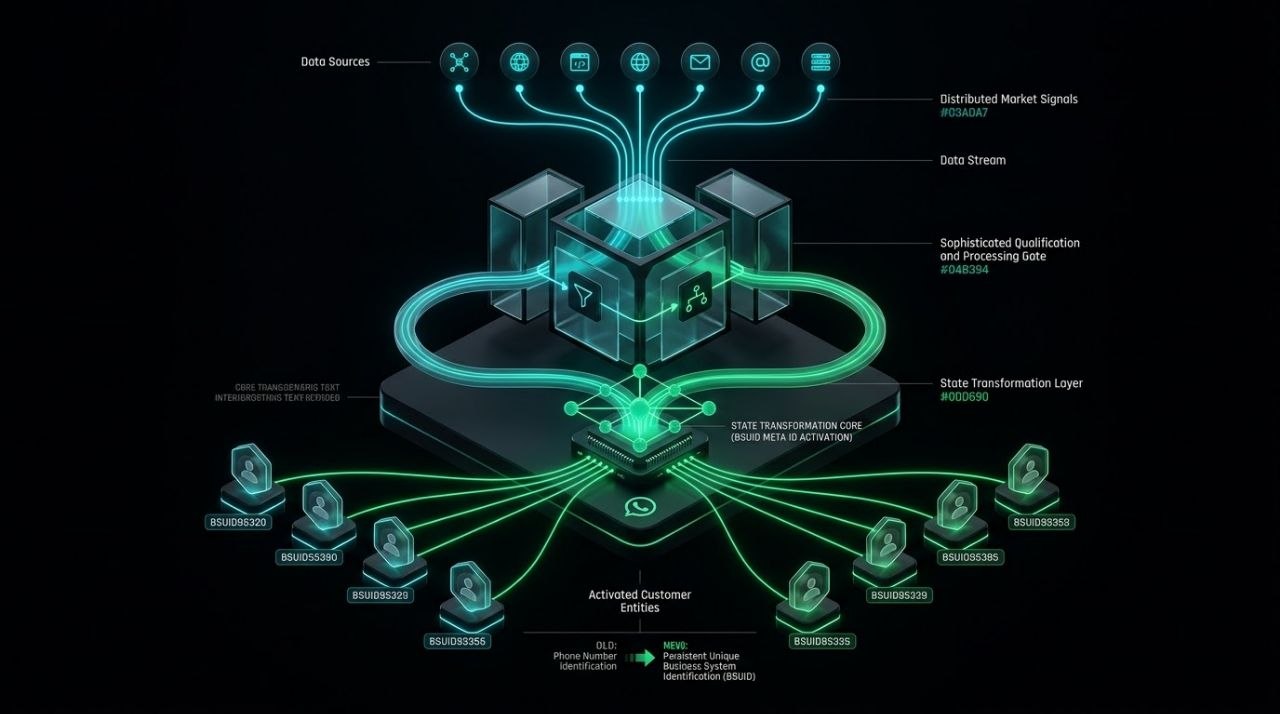
Decoding BSUID: Beyond a Simple Phone Number Replacement
WhatsApp introduced Usernames as an alternative to phone numbers for user identification, with BSUID serving as the backend infrastructure facilitating unique identification. BSUID acts as a persistent backend identity that enables system integration between businesses and WhatsApp, not merely a user interface. Distinguishing BSUID from public usernames, it is emphasized that BSUID is private and automatic, designed for machines and enterprise systems. Quoting Claim-1, BSUID is the primary enabler for advanced business features such as omnichannel routing and CRM synchronization, allowing businesses to manage customer interactions seamlessly across multiple channels.
Efficiency vs Risk: BSUID Implications Analysis for Business Data Management
BSUID is designed to provide a unique, persistent identity for business accounts on the WhatsApp platform, enabling more efficient system integration compared to using phone numbers. Using Claim-2, BSUID eliminates reliance on phone numbers that are prone to errors and lack persistence when customers switch operators, improving operational efficiency. Integrating Claim-3, large-scale BSUID adoption carries privacy implications because user data will be directly linked to business identities, increasing the risk of leaking sensitive information if endpoint security is not maintained. This risk framework underscores that every endpoint connected to BSUID becomes a potential point of exposure for customer data, necessitating reinforcement of security with protocols like end-to-end encryption and access control. Offering an evaluation framework: large enterprises with high-volume, complex transactions will benefit most from BSUID, while SMBs may only require public usernames. Analyzing long-term consequences: BSUID enables seamless customer journey tracking, but also increases exposure to regulations such as GDPR or Financial Services Authority Regulation No. 5/2022 on Personal Data Protection, compelling businesses to strengthen regulatory compliance.
Monetizing Digital Assets via BSUID: Opportunities and Ethical Limitations
BSUID can be leveraged to increase digital asset monetization and customer personalization by providing richer, more persistent transaction and interaction data than phone numbers. Combining Claim-4, BSUID stores more detailed and persistent transaction and interaction data, creating a rich customer database. Strategic implications: with more detailed data, businesses can perform more precise cross-selling, dynamic customer segmentation, and real-time personalized promotions. However, including counterpoint, although BSUID opens up monetization opportunities, businesses must comply with WhatsApp platform rules and avoid practices such as spamming or data scraping that violate terms of service. Providing ethical guidance: use BSUID only to enhance customer service, not to manipulate behavior or sell data to third parties without clear consent, maintaining customer trust.
Practical Steps for BSUID Adoption: Risk Mitigation and Value Optimization
For successful BSUID adoption, businesses need to conduct an implementation checklist: verify BSUID ownership through the WhatsApp Business dashboard, integrate with CRM using official WhatsApp APIs, and perform penetration testing on endpoints to identify vulnerabilities. Suggest implementing security protocols: enable two-factor authentication for administrator accounts, log and monitor API access regularly, and encrypt data at rest to protect customer data from unauthorized access. Emphasizing the conclusion: BSUID is an inevitable digital identity evolution for modern businesses. The decision to adopt BSUID must balance leveraging technology innovation and protecting the most valuable asset: customer trust. With a sound strategy, BSUID can become a catalyst for sustainable business growth.
Mengurai BSUID: Lebih dari Sekadar Pengganti Nomor Telepon
WhatsApp telah mengenalkan Username sebagai alternatif pengganti nomor telepon untuk identitas pengguna, dengan BSUID sebagai infrastruktur backend yang memfasilitasi identifikasi unik. BSUID bertindak sebagai identitas backend persisten yang memfasilitasi integrasi sistem antara bisnis dan WhatsApp, bukan hanya interface pengguna. Membedakan BSUID dengan username publik, dengan menegaskan bahwa BSUID bersifat privat dan otomatis, dirancang untuk mesin dan sistem enterprise. Mengutip Claim-1, BSUID adalah enabler utama bagi fitur-fitur bisnis tingkat lanjut seperti omnichannel routing dan CRM synchronization, memungkinkan bisnis untuk mengelola interaksi pelanggan secara seamless di berbagai channel.
Efisiensi vs Risiko: Analisis Implikasi BSUID bagi Manajemen Data Bisnis
BSUID dirancang untuk memberikan identifikasi unik yang persisten bagi akun bisnis di platform WhatsApp, memungkinkan integrasi sistem yang lebih efisien dibandingkan penggunaan nomor telepon. Menggunakan Claim-2, BSUID mengeliminasi ketergantungan pada nomor telepon yang rentan error dan tidak persisten saat pelanggan berganti operator, meningkatkan efisiensi operasional. Namun, mengintegrasikan Claim-3, penggunaan BSUID dalam skala enterprise membawa implikasi privasi karena data pengguna akan terhubung secara langsung dengan identitas bisnis, meningkatkan risiko kebocoran informasi sensitif jika keamanan endpoint tidak terjaga. Kerangka kerja risiko ini menegaskan bahwa setiap endpoint yang terhubung ke BSUID menjadi titik eksposur potensial bagi data pelanggan, sehingga keamanan endpoint harus diperkuat dengan protokol seperti end-to-end encryption dan access control. Menawarkan framework evaluasi: bisnis skala besar yang memiliki volume transaksi tinggi dan kompleksitas integrasi sistem akan mendapat manfaat maksimal dari BSUID, sementara UMKM mungkin hanya memerlukan username publik. Menganalisis konsekuensi jangka panjang: BSUID memungkinkan tracking customer journey yang seamless, tetapi juga meningkatkan exposure terhadap regulasi GDPR atau POJK No. 5/2022 tentang Perlindungan Data Pribadi, memaksa bisnis untuk memperkuat kepatuhan regulasi.
Monetisasi Aset Digital Melalui BSUID: Peluang dan Batasan Etis
BSUID dapat dimanfaatkan untuk meningkatkan monetisasi aset digital dan personalisasi pelanggan dengan menyediakan data transaksi dan interaksi yang lebih rinci serta persisten dibandingkan nomor telepon. Memadukan Claim-4, BSUID menyimpan data transaksi dan interaksi yang lebih detail dan persisten, menciptakan database pelanggan yang kaya. Menguraikan implikasi strategis: dengan data yang lebih rinci, bisnis dapat melakukan cross-selling yang lebih presisi, segmentasi pelanggan dinamis, dan personalisasi promosi real-time. Namun, menyertakan counterpoint, meskipun BSUID membuka peluang monetisasi, bisnis harus mematuhi aturan platform WhatsApp dan menghindari praktik seperti spamming atau data scraping yang melanggar terms of service. Memberikan panduan etis: gunakan BSUID hanya untuk meningkatkan layanan pelanggan, bukan untuk manipulasi perilaku atau penjualan data ke pihak ketiga tanpa consent yang jelas, menjaga kepercayaan pelanggan.
Langkah Praktis Adopsi BSUID: Mitigasi Risiko dan Optimasi Nilai
Untuk adopsi BSUID yang sukses, bisnis perlu melakukan checklist implementasi: verifikasi kepemilikan BSUID melalui dashboard WhatsApp Business, integrasikan dengan CRM menggunakan API resmi WhatsApp, dan lakukan penetration testing pada endpoint untuk mengidentifikasi kerentanan. Sarankan penerapan protocol keamanan: aktifkan two-factor authentication untuk akun administrator, log dan monitor akses API secara berkala, serta enkripsi data di storage untuk melindungi data pelanggan dari akses tidak autorisasi. Menegaskan pentingnya konklusi: BSUID adalah evolusi identitas digital yang tidak bisa dihindari oleh bisnis modern. Keputusan untuk mengadopsi BSUID harus seimbang antara memanfaatkan inovasi teknologi dan melindungi aset paling berharga: kepercayaan pelanggan. Dengan strategi yang matang, BSUID dapat menjadi pendorong pertumbuhan bisnis yang berkelanjutan.