Introduction: Why Traditional CRM Is Dead?
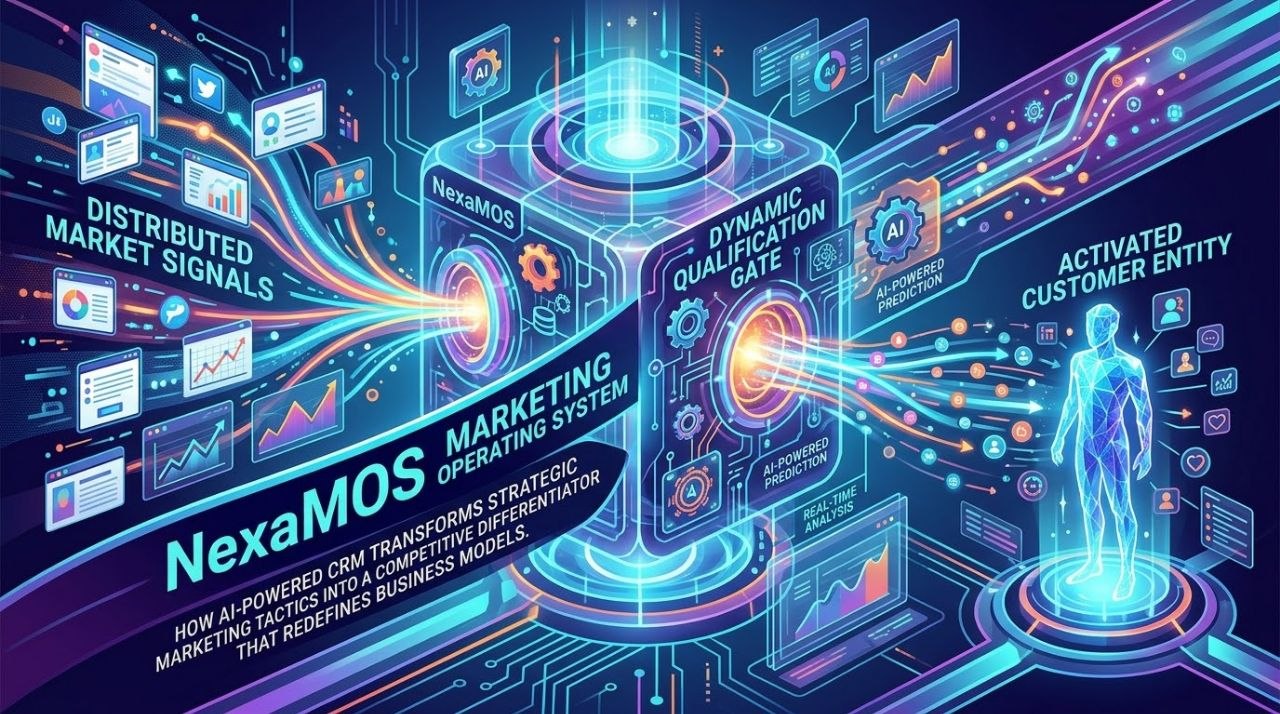
Mass marketing and traditional CRM approaches have lost relevance in the digital era. Companies no longer compete with products but with their ability to understand and respond to customer needs in real time. Data and AI are now the primary infrastructure, making "marketing as a product"—where personalization and behavioral prediction become core. The question remains: is the complexity and implementation cost of AI CRM justified by its strategic value?
Modern CRM Architecture: Integrating NLP and Predictive Analytics
Modern CRM architecture integrates Natural Language Processing (NLP) and predictive analytics. AI-powered chatbots automate customer service, generating high-value interaction data that can be processed to derive behavioral insights. Meanwhile, predictive analytics processes transactional and behavioral data to produce predictive insights that scale personalization. A CRM platform's AI capability evaluation framework should include language adaptation capabilities, feedback loop learning, and inference scalability.
Measuring Success: Beyond Leads and Click-through Rates
Traditional metrics like lead volume and click-through rates are insufficient for assessing business growth quality. This article introduces a holistic Return on Investment (ROI) framework that measures the impact of AI CRM on customer lifetime value, churn rate, and marketing budget allocation efficiency. A benchmarking template is provided to compare AI CRM results against control experiments or traditional marketing models, offering a more accurate picture of long-term value.
Implementation Practices: Real Steps Towards Predictive Marketing
Implementing AI CRM requires systematic stages: inventory of internal data, prioritization of use cases (such as customer service or upselling), and measurement of incremental impact. Real case studies demonstrate significant business transformation, although technical and organizational risks are often overlooked—including siloed data fragmentation, employee resistance, and complexities of AI governance. A practical checklist is provided to avoid common pitfalls.
Conclusion: The Future That Has Already Arrived
AI CRM is not an add-on feature but the core of a data architecture that is redefining the marketing function. Companies that fail to adopt AI CRM will lag behind in their ability to predict and respond to customer needs. The future competitive advantage will be dominated by those who can convert customer data into automatically personalized marketing actions.
Pendahuluan: Mengapa CRM Tradisional Telah Mati?
Pemasaran massal dan pendekatan CRM tradisional telah kehilangan relevansinya di era digital. Perusahaan tidak lagi bersaing dengan produk, tetapi dengan kemampuan untuk memahami dan merespons kebutuhan pelanggan secara real-time. Data dan AI kini menjadi infrastruktur utama, menjadikan "pemasaran sebagai produk"—di mana personalisasi dan prediksi perilaku menjadi inti. Pertanyaannya: apakah kompleksitas dan biaya implementasi CRM AI sepadan dengan nilai strategisnya?
Arsitektur CRM Modern: Integrasi NLP dan Predictive Analytics
Arsitektur CRM modern mengintegrasikan Natural Language Processing (NLP) dan predictive analytics. Chatbot bertenaga NLP mengotomatiskan layanan pelanggan, menciptakan data interaksi bernilai tinggi yang dapat diproses untuk menghasilkan wawasan perilaku. Sementara itu, predictive analytics mengolah data transaksional dan perilaku untuk menghasilkan insight prediktif yang menskalakan personalisasi. Framework evaluasi kapabilitas AI yang harus dimiliki platform CRM modern meliputi kemampuan adaptasi bahasa, learning dari feedback loop, dan skalabilitas inferensi.
Mengukur Keberhasilan: Beyond Leads dan Click-through Rates
Metrik lama seperti jumlah leads dan click-through rates tidak cukup untuk menilai kualitas pertumbuhan bisnis. Artikel ini memperkenalkan framework Return on Investment (ROI) holistik yang mengukur dampak CRM AI pada lifetime value pelanggan, churn rate, dan efisiensi alokasi anggaran pemasaran. Template benchmarking dibuat untuk membandingkan hasil CRM AI dengan eksperimen kontrol atau model pemasaran tradisional, memberikan gambaran yang lebih akurat tentang nilai jangka panjang.
Praktik Implementasi: Langkah Nyata Menuju Pemasaran Prediktif
Implementasi CRM AI memerlukan tahapan sistematis: inventarisasi data internal, prioritisasi use case (seperti customer service atau upselling), dan pengukuran impact incremental. Studi kasus nyata menunjukkan transformasi bisnis signifikan, meskipun risiko teknis dan organisasi sering terabaikan—termasuk fragmentasi data silo, resistensi karyawan, dan kompleksitas governance AI. Checklist praktis disediakan untuk menghindari kesalahan umum.
Penutup: Masa Depan yang Sudah Tiba
CRM AI bukan fitur tambahan, melainkan inti dari arsitektur data yang membentuk ulang fungsi pemasaran. Perusahaan yang gagal mengadopsi CRM AI akan tertinggal dalam ability untuk memprediksi dan merespons kebutuhan pelanggan. Keunggulan kompetitif masa depan akan dikuasai oleh mereka yang bisa mengonversi data pelanggan menjadi tindakan pemasaran yang dipersonalisasi secara otomatis.