Understanding Market Intelligence: Beyond Raw Data Collection
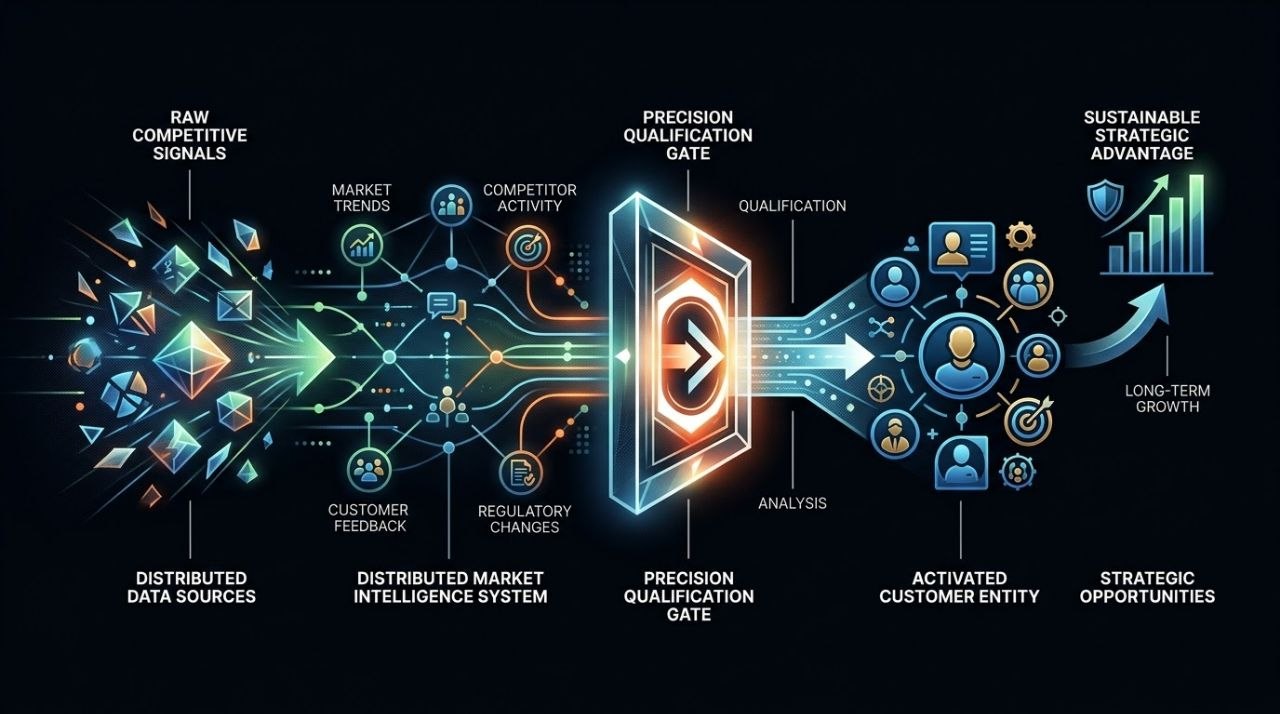
Market intelligence is not merely a routine of gathering raw data; it is a systematic process that transforms information volume into strategic insights for decision-making. Unlike conventional market research, which tends toward reactive and passive approaches, market intelligence demands proactive, measurable, and collaborative methods. Business owners must understand that its primary output is insights supporting long-term visibility, not just descriptive reports.
Foundational Architecture: Four Core Components You Need
Four critical components form the foundational architecture of an effective market intelligence system. First, key performance indicators (KPIs) such as trend prediction accuracy rates, response time to market issues, and the ROI of strategy implementation based on insights (claim-1) serve as measurement benchmarks. Second, efficient primary and secondary data collection flows involve identifying key variables, prioritizing data sources, multi-method integration (claim-2), and iterative validation (claim-2). Third, data visualization tools like interactive BI dashboards (claim-3) present complex findings in formats easily understood by executive teams. Fourth, cross-functional collaboration models between content and marketing teams (claim-4) ensure insights can be operationally implemented. These four elements form a continuous PDCA cycle, ensuring the system remains relevant and adaptable to environmental changes.
Practical Steps to Design Your Own Intelligence System
To design your own market intelligence system, business owners can follow these practical steps: Begin with initial KPI identification (claim-1) to establish measurable goals. Prioritize data sources based on relevance and lead time (claim-2) to avoid overspending on less useful information. Integrating Business Intelligence dashboards (claim-3) such as Tableau or PowerBI presents data in time-series graphs and competitive heatmaps, facilitating real-time decision-making. Establishing a cross-functional hub (claim-4) builds collaboration across functions, supported by agile frameworks for adaptive content development and analytics-based feedback loops, ensuring continuous campaign optimization.
Measuring Success: Metrics That Truly Matter to Business Owners
The success of a market intelligence system is not measured by the amount of data collected but by actual business impact. Important metrics include trend prediction accuracy (claim-1): how well the system forecasts market changes. Response time to market issues measures adaptation speed, while ROI calculates the financial benefits of insight-based strategy implementation. Failing to measure these metrics can result in lost business momentum and misallocation of resources, ultimately weakening a company's competitive position.
Common Challenges & Implementation Solutions for SMEs and Corporates
System implementation often faces challenges such as budget constraints, limited data access, and departmental silos. For resource-limited scenarios, pragmatic solutions include phased-in approaches to adopting visualization tools (claim-3), where basic BI dashboards are implemented first before enhancing functionality. Agile models in team collaboration (claim-4) are also highly effective, enabling content and marketing teams to work iteratively, optimizing resource use and accelerating adaptation to market changes.
Conclusion: Building Advantage Through Intelligence Excellence
Business owners must adopt a holistic architectural approach to market intelligence, not just data collection. Investment in such systems is a risk mitigation strategy and a gateway to faster growth opportunities, not a mere cost burden. By building a strong foundation from the four core components—metrics, data collection algorithms, visualization tools, and cross-functional collaboration—businesses can transform insights into sustainable competitive advantages.
Memahami Intelijen Pasar: Lebih dari Sekadar Mengumpulkan Data
Intelijen pasar bukanlah sekadar rutinitas pengumpulan data mentah; ia adalah proses sistematis yang mengubah volume informasi menjadi insight strategis untuk pengambilan keputusan. Berbeda dengan riset pasar konvensional yang cenderung reaktif dan pasif, intelijen pasar menuntut pendekatan proaktif yang terukur dan kolaboratif. Pemilik bisnis harus memahami bahwa output utamanya adalah wawasan yang mendukung visibilitas jangka panjang, bukan sekadar laporan deskriptif.
Arsitektur Dasar Intelijen Pasar: Empat Komponen Utama yang Harus Dimiliki
Empat komponen krusial membentuk arsitektur dasar sistem intelijen pasar yang efektif. Pertama, indikator kinerja utama (KPI) seperti tingkat akurasi prediksi tren, waktu respons terhadap isu pasar, dan ROI dari implementasi strategi berbasis insight (claim-1) menjadi acuan pengukuran. Kedua, alur pengumpulan data primer dan sekunder yang efisien melibatkan identifikasi variabel kunci, prioritasasi sumber data, integrasi multi-metode (claim-2), serta validasi iteratif. Ketiga, tools visualisasi data seperti dashboard BI interaktif (claim-3) menyajikan temuan kompleks dalam format yang mudah dipahami oleh tim eksekutif. Keempat, model kolaborasi cross-fungsional antara tim konten dan pemasaran (claim-4) memastikan insight dapat diimplementasikan secara operasional. Keempat elemen ini membentuk siklus PDCA yang berkelanjutan, memastikan sistem selalu relevan dan adaptif terhadap perubahan lingkungan.
Langkah Praktis Merancang Sistem Intelijen Anda Sendiri
Untuk merancang sistem intelijen pasar sendiri, pemilik bisnis dapat mengikuti langkah-langkah praktis berikut: Mulai dengan identifikasi KPI awal (claim-1) untuk menetapkan tujuan yang terukur. Prioritisasi sumber data berdasarkan relevansi dan lead time (claim-2) guna menghindari overspending pada informasi yang kurang bermanfaat. Integrasi dashboard Business Intelligence (claim-3) seperti Tableau atau PowerBI menyajikan data dalam grafik time-series dan heatmaps kompetitif, memfasilitasi pengambilan keputusan real-time. Pembentukan cross-functional hub (claim-4) membangun kolaborasi antar fungsi, didukung oleh framework agile untuk pengembangan konten adaptif dan feedback loop berbasis analytics, memastikan optimisasi kampanye berkelanjutan.
Mengukur Keberhasilan: Metrik yang Benar-Benar Penting bagi Pemilik Bisnis
Keberhasilan sistem intelijen pasar bukan diukur dari banyaknya data yang dikumpulkan, melainkan dari dampak nyata bisnis. Metrik penting termasuk tingkat akurasi prediksi tren (claim-1): seberapa baik sistem memperkirakan perubahan pasar. Waktu respons terhadap isu pasar mengukur kecepatan adaptasi, sementara ROI menghitung manfaat finansial dari implementasi strategi berbasis insight. Kegagalan mengukur metrik ini dapat mengakibatkan kehilangan momentum bisnis dan alokasi sumber daya yang salah, yang pada akhirnya melemahkan posisi kompetitif perusahaan.
Tantangan Umum & Solusi Implementasi bagi UMKM dan Korporasi
Implementasi sistem intelijen sering menghadapi tantangan seperti keterbatasan anggaran, akses data terbatas, dan silo departemen. Untuk skenario sumber daya terbatas, solusi pragmatis meliputi pendekatan phased-in dalam mengadopsi tools visualisasi (claim-3), dimana dashboard BI dasar diterapkan terlebih dahulu sebelum meningkatkan fungsionalitas. Model agile pada kolaborasi tim (claim-4) juga sangat efektif, karena memungkinkan tim konten dan pemasaran bekerja secara iteratif, mengoptimalkan penggunaan sumber daya dan mempercepat adaptasi terhadap perubahan pasar.
Kesimpulan: Membangun Keunggulan Lewat Keunggulan Intelijen
Pemilik bisnis harus mengadopsi pendekatan arsitektural holistik untuk intelijen pasar, bukan sekadar mengumpulkan data. Investasi dalam sistem ini adalah strategi mitigasi risiko dan pembuka peluang pertumbuhan yang lebih cepat, bukan beban biaya semata. Dengan membangun fondasi yang kuat dari empat komponen utama—metrik, algoritma pengumpulan data, tools visualisasi, dan kolaborasi cross-fungsional—bisnis dapat mengubah insight menjadi keunggulan kompetitif yang berkelanjutan.