Conversion as a Journey, Not a Transaction
Lead conversion is an ongoing process that demands close coordination between marketing teams (lead generation) and sales teams (lead nurturing). Without systematic nurturing at each stage, valuable leads risk being lost or falling into a "dead zone." Therefore, practitioners must abandon the static view that conversion is a one-time event and adopt a collaborative journey approach.
Granular Nurturing: Automating the Transition from MQL to SQL
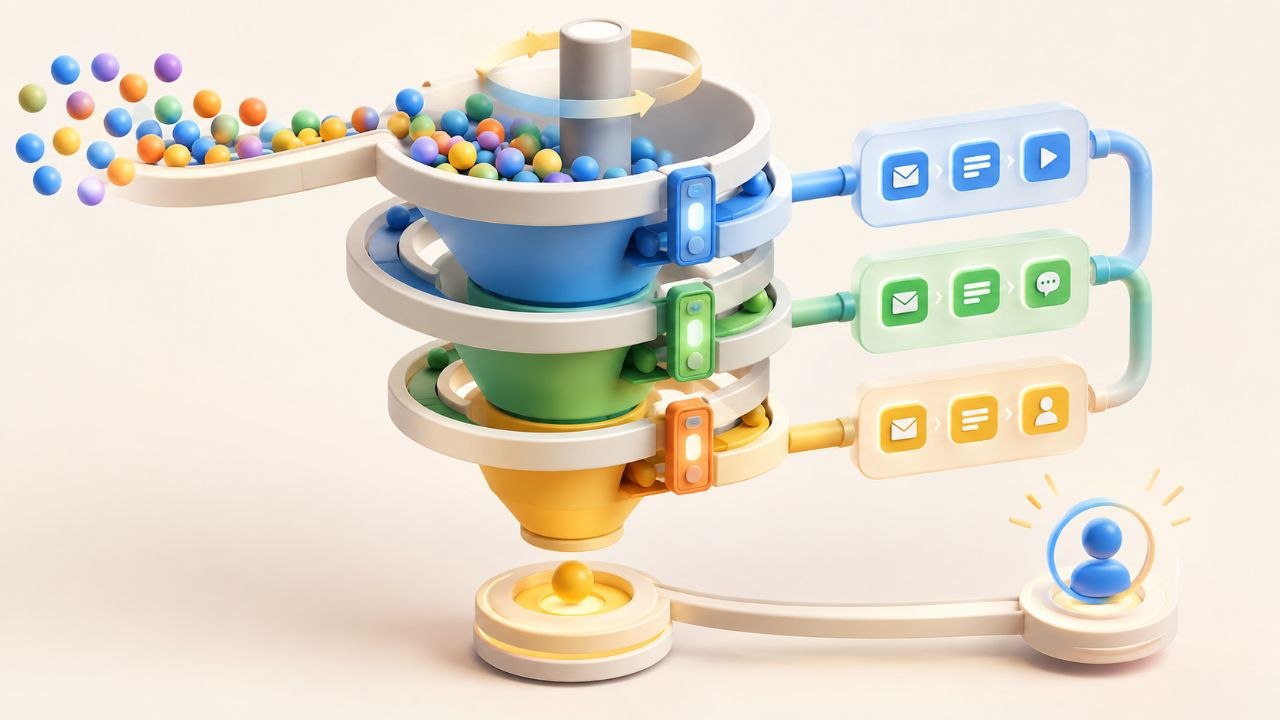
Marketing teams must design nurturing cadences tailored to the maturity level of leads (MQLs). Trigger-based automation (e.g., content downloads, demo request clicks) is used to score and qualify leads into SQLs. The nurturing framework should incorporate personalized content based on industry, company size, and specific pain points to ensure relevance and effectiveness.
Personalization and Email Nurture Campaigns: The Primary Conversion Tools
Email nurture campaigns triggered by behavioral events (e.g., abandoned carts, low engagement) are far more effective than mass broadcast emails. Dynamic personalization (dynamic content blocks, smart CTAs) increases click-through rates and identifies leads with high intent. Analyzing nurture campaign performance (open rates, click-through rates, conversion rates) provides a feedback loop for refining nurturing playbooks.
Optimizing LCR: Granular Analysis by Channel and Stage
Calculating overall LCR can be misleading; practitioners should break down this ratio by channel (SEO, SEM, social ads, events) and by funnel stage. Identifying channels and stages with the highest LCR enables optimal budget and resource allocation. Using granular dashboards for real-time LCR tracking allows for strategic pivots when a particular channel underperforms.
Sales-Marketing Alignment: The Final Key to Conversion
Sales teams must consistently apply SQL qualification criteria to ensure marketing nurturing is targeted effectively. Implementing a shared CRM platform (e.g., Salesforce, HubSpot) facilitates end-to-end visibility and collaborative accountability. Regular alignment meetings between sales and marketing (lead review meetings) guarantee that nurturing playbooks remain relevant to actual buyer personas.
Conclusion: Designing a Sustainable Customer Acquisition Engine
Converting leads into customers requires an integrated architecture: marketing generates awareness, nurturing builds interest, and sales closes deals. Optimizing this engine begins with understanding that conversion is a journey, not an event. Practitioners must adopt a combination of automated personalization, granular nurturing pipelines, and channel-specific LCR analysis to create a predictable growth engine.
Konversi Lead: Bukan Transaksi, Melainkan Journey Kolaboratif
Lead conversion adalah proses berkelanjutan yang mensyaratkan koordinasi erat antara tim pemasaran (lead generation) dan tim penjualan (lead nurturing). Tanpa nurturing yang sistematis di setiap tahapan, leads berpotensi hilang atau masuk ke fase 'dead zone'. Oleh karena itu, praktisi harus membuang pandangan statis bahwa konversi adalah event tunggal dan mengadopsi pendekatan journey kolaboratif.
Nurturing Granular: Mengubah MQL Menjadi SQL Secara Otomatis
Tim pemasaran harus merancang nurturing cadence yang sesuai dengan tahapan maturity leads (MQL). Trigger-based automation (misalnya: download content, klik demo request) digunakan untuk scoring dan qualifying leads menjadi SQL. Framework nurturing harus mencakup personalisasi konten berdasarkan industry, size company, dan pain points spesifik agar nurturing lebih relevan dan efektif.
Personalisasi dan Email Nurture Campaign: Senjata Utama Konversi
Email nurture campaign yang dipicu oleh behavioral triggers (abandon cart, low engagement) jauh lebih efektif daripada blast email massal. Personalisasi dinamis (dynamic content blocks, smart CTAs) meningkatkan click-through rate dan mengidentifikasi leads dengan intent tinggi. Analisis performance nurture campaign (open rate, click rate, conversion rate) memberikan feedback loop untuk refining nurturing playbook.
Optimalkan LCR: Granular Analysis Per Channel dan Tahap
Menghitung LCR secara keseluruhan sering menyesatkan; praktisi harus breakdown rasio ini per channel (SEO, SEM, social ads, event) dan per tahap funnel. Identifikasi channel dan tahap dengan LCR tertinggi untuk mengalokasikan budget dan resources secara optimal. Gunakan dashboard granular untuk tracking LCR secara real-time dan melakukan pivot strategi jika performa salah satu channel menurun.
Kolaborasi Sales-Pemasaran: Kunci Akhir Konversi
Sales team harus menggunakan SQL qualification criteria yang konsisten agar nurturing pemasaran tepat sasaran. Implementasi shared CRM platform (misalnya Salesforce, HubSpot) memfasilitasi visibility end-to-end journey dan accountability kolaboratif. Regular alignment meeting antara sales dan marketing (lead review meetings) memastikan nurturing playbook selalu relevan dengan buyer persona aktual.
Kesimpulan: Merancang Customer Acquisition Engine yang Berkelanjutan
Merubah lead menjadi customer mensyaratkan arsitektur yang terintegrasi: pemasaran menghasilkan awareness, nurturing mengembangkan interest, dan sales menutup deal. Optimalisasi engine ini dimulai dari understanding bahwa konversi adalah journey, bukan event. Praktisi harus mengadopsi kombinasi personalisasi otomatis, nurturing pipeline yang granular, dan analisis LCR per channel untuk menciptakan growth engine yang predictable.